Sushi Myths — Debunked
Raw fish and sushi are surrounded by misconceptions — some harmless, others potentially dangerous. Let's separate fact from fiction so you can enjoy sushi safely and confidently.
Myth #1: "Sushi Grade" Is a Regulated Standard
This is the foundational myth that inspired this entire website. Many consumers believe that "sushi grade" or "sashimi grade" is an official FDA designation or industry standard with specific criteria.
The truth: There is no legal or regulatory definition of "sushi grade" in the United States. The FDA does not certify, grade, or label fish as "sushi grade." The term is entirely a marketing designation used by retailers and restaurants. Any vendor can label any fish as "sushi grade" without meeting any specific standard.
What actually matters: Whether the fish has been frozen to FDA-recommended parasite-destruction temperatures (see our safety guide), how it was handled and stored, and the reputation of the supplier.
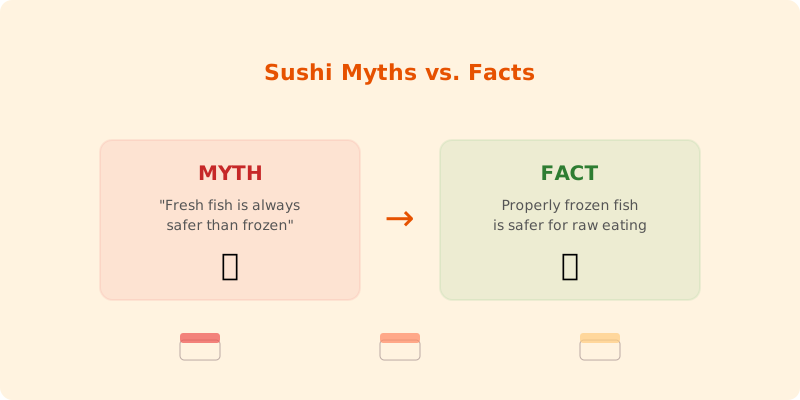
Myth #2: Fresh Fish Is Always Safer Than Frozen
This is one of the most dangerous sushi myths. Many people seek out "never frozen" fish for sushi, believing that fresh is inherently better and safer.
The truth: For raw consumption, properly frozen fish is safer than fresh fish. Freezing at the correct temperatures kills parasites. "Fresh" fish that has never been frozen may still contain live parasites capable of causing illness. The only exception is certain species of tuna, which are naturally low-risk for parasites.
Quality note: Modern flash-freezing technology preserves fish quality so effectively that even professional sushi chefs often cannot distinguish flash-frozen fish from fresh in blind tastings. The key is how quickly and how cold the fish was frozen.
Myth #3: You Can Tell If Fish Is Safe by Looking at It
Some people believe they can visually identify parasites or determine if fish is safe for raw consumption by examining it carefully.
The truth: While visual inspection can reveal some signs of poor quality (discoloration, sliminess, off-color), most parasites in fish are microscopic or embedded deep in the muscle tissue where they're invisible to the naked eye. Anisakis larvae, the most common parasite in saltwater fish, are often too small to see without magnification.
Visual inspection is important for quality assessment, but it is not a substitute for proper freezing when it comes to parasite safety.
Myth #4: Sushi Is Just Raw Fish
Many Westerners equate sushi with raw fish, but this is a misunderstanding of what sushi actually is.
The truth: The word "sushi" refers to the seasoned vinegared rice, not the fish. Sushi rice (shari) is seasoned with rice vinegar, sugar, and salt. The fish or other toppings are called "neta." There are many types of sushi that contain no raw fish at all:
- Tamago — Sweet egg omelet
- Unagi — Grilled freshwater eel
- Kappa maki — Cucumber roll
- Inari — Sweet tofu skin pouches filled with rice
- Ebi — Cooked shrimp
- California roll — Imitation crab, avocado, and cucumber
Sashimi, on the other hand, is specifically raw fish served without rice.
Myth #5: Wasabi Kills Parasites and Bacteria
A popular belief is that the wasabi and pickled ginger served with sushi have antimicrobial properties that make raw fish safer to eat.
The truth: Real wasabi (Wasabia japonica) does contain compounds with mild antimicrobial properties, including allyl isothiocyanate. However, the concentrations present in the small amount served with sushi are nowhere near sufficient to kill parasites or significantly reduce bacterial loads. It's a condiment, not a safety measure.
Additionally, most "wasabi" served in restaurants outside Japan is actually a mixture of horseradish, mustard, and green food coloring — not real wasabi at all.
Myth #6: Lemon Juice or Vinegar "Cooks" Fish and Makes It Safe
This myth comes from ceviche preparation, where citrus juice is used to "cook" fish chemically.
The truth: Acid (from citrus juice or vinegar) does denature proteins in fish, changing its texture and appearance similar to cooking. However, acid alone does not reliably kill parasites or all harmful bacteria. Ceviche preparation reduces but doesn't eliminate risk.
The salt-and-vinegar curing used for saba (mackerel) sushi adds some safety benefits but is primarily for flavor and preservation, not parasite destruction. Proper freezing remains the only reliable method for killing parasites.
Myth #7: All Sushi Fish Must Be Frozen First
Many people believe every piece of fish in a sushi restaurant was frozen at some point.
The truth: The FDA recommends that most fish served raw should be frozen first. However, there are notable exceptions:
- Tuna (bluefin, yellowfin, bigeye, albacore) — exempt from the freezing recommendation due to low parasite risk
- Farm-raised fish in controlled environments — some aquaculture operations produce fish with minimal parasite risk, though freezing is still generally recommended
- Cooked sushi items — eel, shrimp, octopus, and other cooked toppings don't require prior freezing
Myth #8: Farmed Fish Is Always Inferior for Sushi
There's a widespread belief that wild-caught fish is always better than farmed fish for sushi.
The truth: For sushi specifically, farm-raised fish often has advantages:
- Controlled diet means more consistent fat content and flavor
- Lower parasite exposure compared to wild fish (though still requires freezing)
- Year-round availability and consistent quality
- Traceability — easier to verify sourcing and handling
Most salmon served as sushi worldwide is farm-raised Atlantic salmon, and many sushi chefs prefer it for its consistent quality. That said, wild fish can offer more complex flavors and some people prefer it for environmental or taste reasons.
Myth #9: You Can Make Any Store-Bought Fish Into Sushi at Home
Some home cooks assume that any "fresh-looking" fish from the grocery store can be used for sushi.
The truth: Fish sold at standard grocery store fish counters is almost always intended for cooking, not raw consumption. It may not have been frozen to parasite-destruction temperatures, and the handling protocols may not be suitable for raw eating.
To safely make sushi at home, source fish from a vendor that sells fish specifically intended for raw consumption, or buy commercially frozen fish that has been frozen to FDA guidelines. See our buying guide for detailed recommendations.
Myth #10: Sushi Is Inherently Dangerous
Some people avoid sushi entirely because they believe eating raw fish is inherently risky.
The truth: When properly sourced, handled, and prepared, sushi is a safe food that billions of people enjoy regularly. Japan, where sushi originates, has one of the longest life expectancies in the world. The key factors are:
- Proper freezing (for most species) to destroy parasites
- Cold-chain management from ocean to plate
- Clean handling and preparation
- Sourcing from reputable suppliers
In the United States, sushi restaurants are subject to state and local health inspections, and most follow FDA guidelines for raw fish handling. Foodborne illness from sushi is relatively rare compared to many other food sources.