Fish Safety & Freezing: The Complete Guide
Eating raw fish can be perfectly safe — but only when proper precautions are taken. This guide covers everything you need to know about the science of making raw fish safe, from FDA guidelines to the biology of parasites.
Why Raw Fish Can Be Dangerous
Raw or undercooked fish can harbor two main types of hazards:
Parasites
Several types of parasites can infect fish and cause illness in humans:
- Anisakis simplex — The most common parasite in saltwater fish. Causes anisakiasis, which results in severe abdominal pain, nausea, and vomiting. The larvae are typically found in the body cavity and flesh of fish.
- Diphyllobothrium (fish tapeworm) — Found in freshwater and anadromous fish (fish that migrate between salt and fresh water, like salmon). Can grow to several meters long in the human intestine.
- Pseudoterranova (codworm) — Common in cod, halibut, and other bottom-dwelling fish. Similar symptoms to anisakiasis.
- Gnathostoma — More common in fish from Southeast Asia. Can cause serious illness as larvae migrate through body tissues.
Bacteria
While freezing kills parasites, it does not kill bacteria. Bacterial contamination is controlled through proper handling, temperature management, and hygiene:
- Vibrio — Naturally occurs in warm coastal waters. Can cause gastroenteritis, wound infections, and in severe cases, septicemia.
- Listeria monocytogenes — Can contaminate fish during processing. Particularly dangerous for pregnant women, elderly individuals, and immunocompromised people.
- Salmonella — Can contaminate fish through cross-contamination during handling and processing.
- Histamine (scombrotoxin) — Not a bacteria itself, but produced by bacteria when certain fish (tuna, mackerel, mahi-mahi) are not kept cold enough. Causes scombroid poisoning.
FDA Freezing Requirements
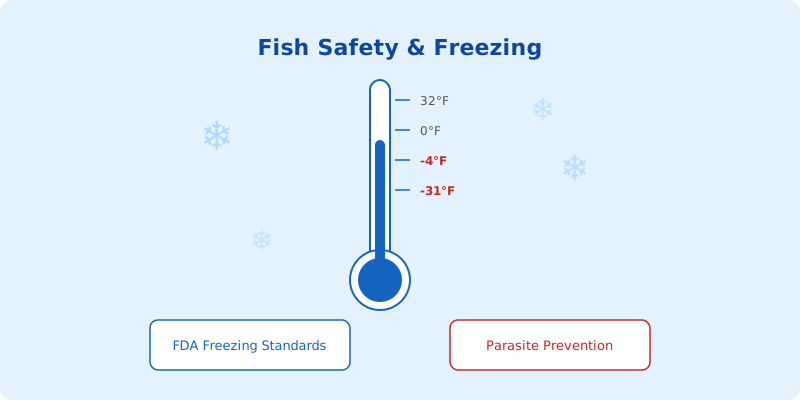
The FDA's Fish and Fishery Products Hazards and Controls Guidance recommends the following freezing protocols to destroy parasites in fish intended for raw consumption:
| Method | Temperature | Duration |
|---|---|---|
| Standard Freezing | -4°F (-20°C) or below | 7 days (168 hours) |
| Blast Freeze + Store | -31°F (-35°C) until solid, then -31°F (-35°C) | 15 hours |
| Blast Freeze + Standard Store | -31°F (-35°C) until solid, then -4°F (-20°C) | 24 hours |
The Tuna Exception
Certain species of tuna are exempt from the FDA's freezing recommendation. These species are considered low-risk for parasites due to their biology:
- Bluefin tuna (Thunnus thynnus) — The most prized sushi fish, often served fresh
- Yellowfin tuna (Thunnus albacares) — Also known as ahi tuna
- Bigeye tuna (Thunnus obesus) — Popular in high-end sushi restaurants
- Albacore tuna (Thunnus alalunga) — The mildest tuna variety
Why are these tuna species safer? Tuna are highly migratory, pelagic (open-ocean) fish that swim in waters where the parasites that infect other fish are less prevalent. Their body chemistry and the acidic environment of their muscle tissue also make them less hospitable to parasites.
Fish That Always Require Freezing
The following commonly consumed raw fish must be frozen before raw consumption:
- Salmon — All species, whether wild or farmed, can harbor Anisakis and Diphyllobothrium parasites
- Yellowtail / Hamachi — Susceptible to Anisakis parasites
- Halibut — Bottom-dwelling fish with higher parasite risk
- Fluke / Hirame — Common in Japanese sushi, requires freezing
- Mackerel / Saba — High parasite risk, always frozen for raw consumption
- Squid — Frequently infected with Anisakis, must be frozen
- Sea bass — Susceptible to various parasites
Temperature Control: The Cold Chain
Beyond freezing, maintaining proper temperatures throughout the supply chain is critical for fish safety:
- Fresh fish storage: Must be kept at 32-38°F (0-3°C) at all times
- Display temperature: Fish in grocery store or restaurant displays should be on ice or in refrigerated cases below 40°F (4°C)
- Transport: Fish should be transported in insulated containers with adequate ice or refrigeration
- Time at room temperature: Raw fish should never sit at room temperature for more than 2 hours (1 hour if above 90°F / 32°C)
Who Should Avoid Raw Fish?
Even with proper handling and freezing, certain groups are advised to avoid raw fish entirely:
- Pregnant women — Risk of Listeria and other infections that can harm the fetus
- Young children — Developing immune systems are more vulnerable
- Elderly individuals — Weakened immune systems increase infection risk
- Immunocompromised individuals — Anyone with a weakened immune system (HIV/AIDS, chemotherapy patients, organ transplant recipients)
- People with liver disease — Particularly at risk for severe Vibrio infections
For more about specific fish species and their safety profiles, check our types of sushi fish guide. Ready to buy fish for sushi? See our buying guide.